
Once projected to be the city’s “brightest jewel,” the Providence Place Mall has seen over 25 tumultuous years ever
since its doors first opened in August 1999.
Despite debate over its claim to fame as the second-largest carpeted mall in the world, Providence Place has survived various economic threats, including the 2008 Great Recession and the sweeping technological advancements of the 2010s — but not without incident.
The mall has faced its share of tribulations, including changing ownership, court receivership and the closure of almost all of its original anchor stores.
Some of this can be attributed to an increase in Americans’ tendency to shop online, compounded by a decrease in the strength of anchor stores, with staple mall franchises like JCPenney and Macy’s announcing sweeping closures across their brick-and-mortar locations. In fact, while the rise of online shopping and the drop in consumerism amid the COVID-19 pandemic have intensified concern for the future of malls in recent years, national trends have long predicted the death of the American mall.
Other reports paint a more positive picture of a comeback for shopping malls — seen by many as important third spaces for young people — with data showing foot traffic upticks in 2025.
Still, it remains uncertain whether Providence Place, now facing court-ordered receivership, will adapt with the changing times or join the ranks of the many shuttered malls in the United States.
The Herald traced the mall’s history from its origins to discover how it became what it is today and where it might go from here.
Despite debate over its claim to fame as the second-largest carpeted mall in the world, Providence Place has survived various economic threats, including the 2008 Great Recession and the sweeping technological advancements of the 2010s — but not without incident.
The mall has faced its share of tribulations, including changing ownership, court receivership and the closure of almost all of its original anchor stores.
Some of this can be attributed to an increase in Americans’ tendency to shop online, compounded by a decrease in the strength of anchor stores, with staple mall franchises like JCPenney and Macy’s announcing sweeping closures across their brick-and-mortar locations. In fact, while the rise of online shopping and the drop in consumerism amid the COVID-19 pandemic have intensified concern for the future of malls in recent years, national trends have long predicted the death of the American mall.
Other reports paint a more positive picture of a comeback for shopping malls — seen by many as important third spaces for young people — with data showing foot traffic upticks in 2025.
Still, it remains uncertain whether Providence Place, now facing court-ordered receivership, will adapt with the changing times or join the ranks of the many shuttered malls in the United States.
The Herald traced the mall’s history from its origins to discover how it became what it is today and where it might go from here.
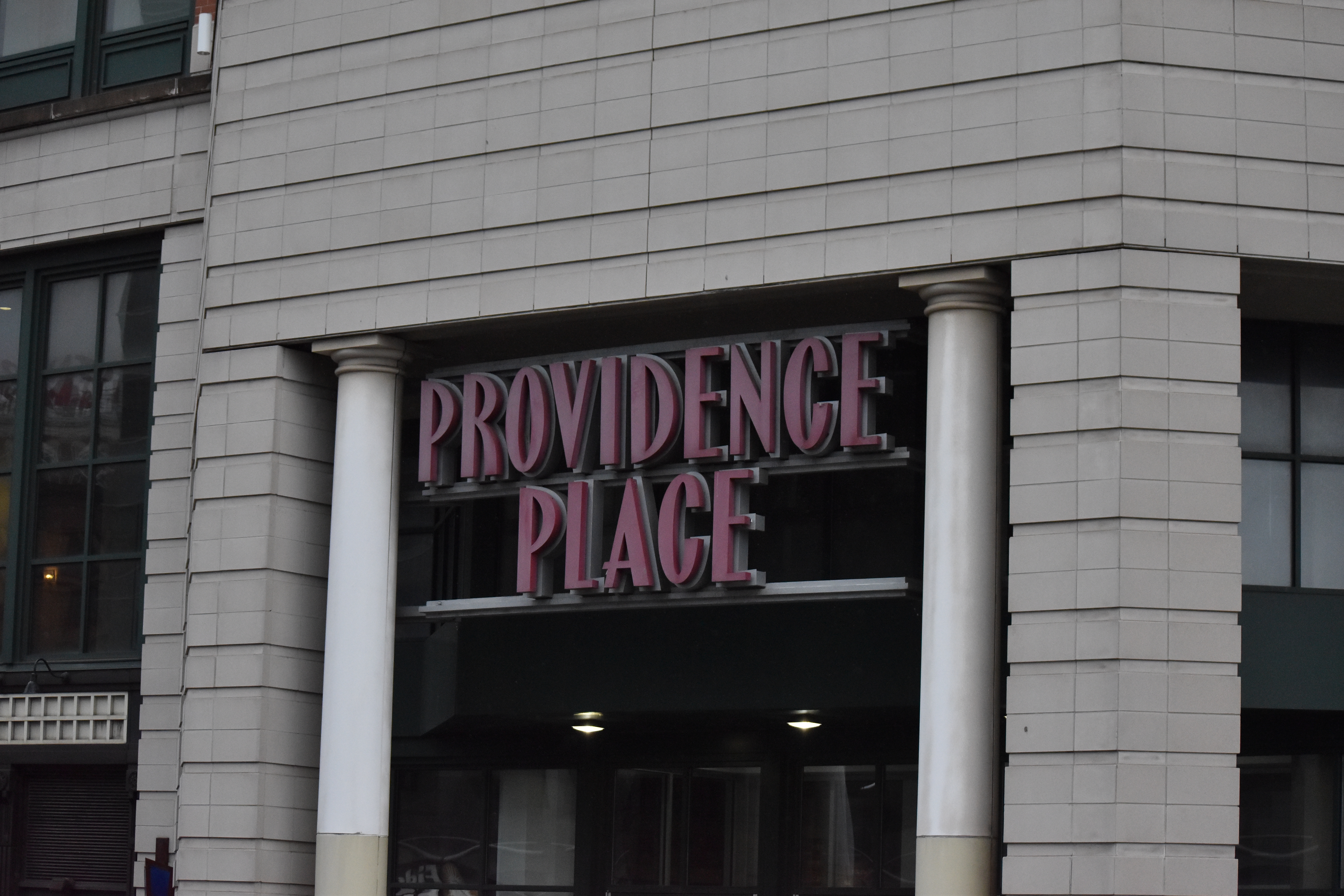
Media by Selina Kao | The Brown Daily Herald
1980s: The dawn of the mall
In the 1980s, the area between downtown Providence and the Rhode Island State House — where the mall now stands — looked very different.
Originally, railroad tracks stretched across this area, dubbed the Capital Center. In 1982, the state approved a $126 million project to move the tracks behind Union Station, the train station that used to serve downtown Providence. The city’s current Amtrak station would later be built in 1986.
This relocation left the parking lots between Union Station and the State House open for development.
The Capital Center Commission was tasked with overseeing development and economic growth around the State House, according to former CCC Chair Deming Sherman.
The CCC’s job was to develop the newly open area into something “as attractive as possible,” without interfering with the view of the State House, Sherman said in a recent interview with The Herald.
Around the time the tracks were relocated, Joseph Paolino Jr. P’06 P’16 — former mayor of Providence and former director of the Rhode Island Department of Economic Development — heard a developer was interested in the lot on which the mall stands today.
This developer initially hoped to build office space on the lot, Paolino said in a recent interview with The Herald. But Paolino recalled receiving pushback for that plan, noting that some individuals involved in deciding how to develop the area didn’t believe Providence had a “very good office market.”
The developer later came back with a senior real estate developer for Macy’s and a new idea, Paolina said: The lot should become a mall.
The proposed mall project was initially supposed to cost $300 million and open by 1991. The project was backed by Melvin Simon and Associates, one of the largest shopping mall developers in the United States at the time and a precursor to Simon Property Group, currently the largest mall owner in the United States.
But construction was delayed by factors such as developer shake-ups, issues with acquiring land from Amtrak and debates over the mall’s financial terms. The mall’s finalized financial agreement with the city, which promised 30 years of property tax stabilization beginning in 2000, wasn’t signed until 1996. By then, Paolino had been succeeded by Vincent “Buddy” Cianci Jr. as mayor and no longer directed the R.I. Department of Economic Development.
In the 1980s, the area between downtown Providence and the Rhode Island State House — where the mall now stands — looked very different.
Originally, railroad tracks stretched across this area, dubbed the Capital Center. In 1982, the state approved a $126 million project to move the tracks behind Union Station, the train station that used to serve downtown Providence. The city’s current Amtrak station would later be built in 1986.
This relocation left the parking lots between Union Station and the State House open for development.
The Capital Center Commission was tasked with overseeing development and economic growth around the State House, according to former CCC Chair Deming Sherman.
The CCC’s job was to develop the newly open area into something “as attractive as possible,” without interfering with the view of the State House, Sherman said in a recent interview with The Herald.
Around the time the tracks were relocated, Joseph Paolino Jr. P’06 P’16 — former mayor of Providence and former director of the Rhode Island Department of Economic Development — heard a developer was interested in the lot on which the mall stands today.
This developer initially hoped to build office space on the lot, Paolino said in a recent interview with The Herald. But Paolino recalled receiving pushback for that plan, noting that some individuals involved in deciding how to develop the area didn’t believe Providence had a “very good office market.”
The developer later came back with a senior real estate developer for Macy’s and a new idea, Paolina said: The lot should become a mall.
The proposed mall project was initially supposed to cost $300 million and open by 1991. The project was backed by Melvin Simon and Associates, one of the largest shopping mall developers in the United States at the time and a precursor to Simon Property Group, currently the largest mall owner in the United States.
But construction was delayed by factors such as developer shake-ups, issues with acquiring land from Amtrak and debates over the mall’s financial terms. The mall’s finalized financial agreement with the city, which promised 30 years of property tax stabilization beginning in 2000, wasn’t signed until 1996. By then, Paolino had been succeeded by Vincent “Buddy” Cianci Jr. as mayor and no longer directed the R.I. Department of Economic Development.
1994: Discovering a criminal foundation
In 1994, in accordance with federal permitting requirements, a team of archaeologists from the Pawtucket-based Public Archaeology Lab investigated the open lot for historic and archaeological remains. What they discovered surprised them.
“We found the entire (Rhode Island State) Prison with walls and the cells and bed frames,” said Deborah Cox MA’82, the firm’s longtime president, in a recent interview with The Herald.
According to PAL archaeology laboratory manager and archivist Heather Olson, the prison was opened in 1838. Conditions were poor, Olson said, explaining that the prison was “an imposing stone structure” designed around a rehabilitative philosophy of solitary confinement and trade skills to prepare prisoners to reenter society. By the late 1860s, prisoners were transferred by foot to a new facility in Cranston. Eventually, the remaining structure was filled in to serve as the foundation for the Rhode Island Normal School, preceding what is now a parking lot for the University of Rhode Island.
After this discovery, the archaeological site was open to the public for tours, according to Olson. There were even initial ideas of putting up an “artifact exhibit in the mall when it first opened, but it never ended up working out,” she said.
In 1994, in accordance with federal permitting requirements, a team of archaeologists from the Pawtucket-based Public Archaeology Lab investigated the open lot for historic and archaeological remains. What they discovered surprised them.
“We found the entire (Rhode Island State) Prison with walls and the cells and bed frames,” said Deborah Cox MA’82, the firm’s longtime president, in a recent interview with The Herald.
According to PAL archaeology laboratory manager and archivist Heather Olson, the prison was opened in 1838. Conditions were poor, Olson said, explaining that the prison was “an imposing stone structure” designed around a rehabilitative philosophy of solitary confinement and trade skills to prepare prisoners to reenter society. By the late 1860s, prisoners were transferred by foot to a new facility in Cranston. Eventually, the remaining structure was filled in to serve as the foundation for the Rhode Island Normal School, preceding what is now a parking lot for the University of Rhode Island.
After this discovery, the archaeological site was open to the public for tours, according to Olson. There were even initial ideas of putting up an “artifact exhibit in the mall when it first opened, but it never ended up working out,” she said.
1996 to 1999: Breaking ground
The $360 million project was formally approved by the Providence City Council in 1996. Designed by Providence-based architect Friedrich St. Florian and Boston-based architecture and design firm Arrowstreet, the building was supposed to be “an elegant blend of older building forms — part 19th-century commercial block, part classic department store and part European galleria,” according to a Providence Journal article at the time.
The mall’s design included over 1.4 million square feet of retail space and over 4,000 parking spaces.
After years of planning and construction, the Providence Place Mall opened on Aug. 20, 1999. The project came in $100 million over budget at $460 million, becoming one of the state’s most expensive development projects at the time.
“I was excited,” Paolino told The Herald. “That was one of the greatest projects ever built in downtown Providence and the state of Rhode Island.”
A gala was held inside the mall on the eve of its opening day to celebrate the occasion. “It was black tie … the place was crawling with people having hors d’oeuvres and drinks,” Sherman said. The event’s attendees included Robert Weygand, one of Rhode Island’s U.S. representatives at the time, and Lincoln Almond, then governor of Rhode Island.
Fewer than half of the mall’s stores were open on the first day, yet crowds streamed through the doors, eager to be the first people to experience the new shopping center. At the time, the mall’s anchor stores — large stores commonly positioned at the end of the mall that often draw most of the center’s traffic — were Nordstrom and Filene’s, two department stores later joined by Lord and Taylor, a third.
The $360 million project was formally approved by the Providence City Council in 1996. Designed by Providence-based architect Friedrich St. Florian and Boston-based architecture and design firm Arrowstreet, the building was supposed to be “an elegant blend of older building forms — part 19th-century commercial block, part classic department store and part European galleria,” according to a Providence Journal article at the time.
The mall’s design included over 1.4 million square feet of retail space and over 4,000 parking spaces.
After years of planning and construction, the Providence Place Mall opened on Aug. 20, 1999. The project came in $100 million over budget at $460 million, becoming one of the state’s most expensive development projects at the time.
“I was excited,” Paolino told The Herald. “That was one of the greatest projects ever built in downtown Providence and the state of Rhode Island.”
A gala was held inside the mall on the eve of its opening day to celebrate the occasion. “It was black tie … the place was crawling with people having hors d’oeuvres and drinks,” Sherman said. The event’s attendees included Robert Weygand, one of Rhode Island’s U.S. representatives at the time, and Lincoln Almond, then governor of Rhode Island.
Fewer than half of the mall’s stores were open on the first day, yet crowds streamed through the doors, eager to be the first people to experience the new shopping center. At the time, the mall’s anchor stores — large stores commonly positioned at the end of the mall that often draw most of the center’s traffic — were Nordstrom and Filene’s, two department stores later joined by Lord and Taylor, a third.
2003 to 2007: The mall’s secret
The mall is not popular among all Providence residents, with some feeling that the city misallocated its resources.
“It’s $250 million plus in tax breaks and incentives for there to be a Nordstrom,” said Adriana Valdez Young ’01, who was a student at Brown in the mall’s early years. “It’s just one of these very laughable moments of capitalism.”
To Valdez Young, the mall, even in its current state, acts as a “boundary” that separates immigrant communities on the west side of Providence from the “very resourced neighborhoods” in the rest of the city.
Further development and gentrification in downtown Providence coincided with the mall’s construction and led to the destruction of mill buildings in Eagle Square, which had operated as a hub for artists like Valdez Young.
While working on an art installation with three other artists — Michael Townsend, Jay Zehngebot and James Mercer — Valdez Young heard a radio advertisement for the mall, she recalled.
According to Valdez Young, the commercial was narrated by a mother saying that the Providence Place Mall made shopping so convenient for her family and ended with the tagline “if only I could live there.”
“In that moment, I was like, ‘Yes, we should live there. That’s what they want, that’s the future of the city and the Providence they’re building, so let’s just go now,’” Valdez Young said.
After coming up with the idea, the four artists originally planned on spending four days in the mall as a competition until they got caught, Valdez Young said. But after staying for four days and discovering a 750-square-foot empty space, she explained, the group decided to build a secret apartment in the mall.
“We thought we were so funny,” Valdez Young said. “This is underutilized space — the same argument that real estate developers (were) using when they (were) justifying knocking down all those mill buildings.”
The artists slowly constructed the apartment inside the mall, eventually building a wall with a locked door and outfitting the space with a couch, waffle maker and PlayStation. The artists periodically lived in the apartment undiscovered over four years — though Valdez Young moved to New York after two.
Townsend was caught when showing the apartment to a visiting artist from Hong Kong and banned from the mall for life. But his sentence was lifted after the 2024 premiere of a documentary recounting the tale of the secret mall apartment.
Valdez Young returned to the mall for the documentary screening in 2024.
“It smells the same,” she said. “Like Orange Julius and that pretzel shop.”
The mall is not popular among all Providence residents, with some feeling that the city misallocated its resources.
“It’s $250 million plus in tax breaks and incentives for there to be a Nordstrom,” said Adriana Valdez Young ’01, who was a student at Brown in the mall’s early years. “It’s just one of these very laughable moments of capitalism.”
To Valdez Young, the mall, even in its current state, acts as a “boundary” that separates immigrant communities on the west side of Providence from the “very resourced neighborhoods” in the rest of the city.
Further development and gentrification in downtown Providence coincided with the mall’s construction and led to the destruction of mill buildings in Eagle Square, which had operated as a hub for artists like Valdez Young.
While working on an art installation with three other artists — Michael Townsend, Jay Zehngebot and James Mercer — Valdez Young heard a radio advertisement for the mall, she recalled.
According to Valdez Young, the commercial was narrated by a mother saying that the Providence Place Mall made shopping so convenient for her family and ended with the tagline “if only I could live there.”
“In that moment, I was like, ‘Yes, we should live there. That’s what they want, that’s the future of the city and the Providence they’re building, so let’s just go now,’” Valdez Young said.
After coming up with the idea, the four artists originally planned on spending four days in the mall as a competition until they got caught, Valdez Young said. But after staying for four days and discovering a 750-square-foot empty space, she explained, the group decided to build a secret apartment in the mall.
“We thought we were so funny,” Valdez Young said. “This is underutilized space — the same argument that real estate developers (were) using when they (were) justifying knocking down all those mill buildings.”
The artists slowly constructed the apartment inside the mall, eventually building a wall with a locked door and outfitting the space with a couch, waffle maker and PlayStation. The artists periodically lived in the apartment undiscovered over four years — though Valdez Young moved to New York after two.
Townsend was caught when showing the apartment to a visiting artist from Hong Kong and banned from the mall for life. But his sentence was lifted after the 2024 premiere of a documentary recounting the tale of the secret mall apartment.
Valdez Young returned to the mall for the documentary screening in 2024.
“It smells the same,” she said. “Like Orange Julius and that pretzel shop.”
2005 to 2010: Turnover and tumult
Just six years after the mall opened, its flagship stores were already changing. In the first eight months of 2005, 10 total stores at the mall closed their doors, although 15 new stores had opened or were planned to open in their place.
Soon after Filene’s came under the ownership of Federated Department Stores — now Macy’s, Inc — in 2005, its Providence Place location was converted to a Macy’s. Lord & Taylor closed in 2005 as well, later replaced by JCPenney.
“Penney’s was the number one requested store in our research,” then-Senior General Manager Tony Kalinowski said in a 2005 Providence Business News article.
Monique Murphy, a store manager for JCPenney at the Providence Place Mall when the flagship first opened, described opening day as “really exciting” in a recent interview with The Herald. She recalled many members of JCPenney’s corporate branch coming to the store to prepare for its grand opening.
One of these corporate visitors was the granddaughter of entrepreneur James Cash Penney, the company’s founder, who “came and talked to all of the employees, all the associates before opening and thanked everybody for coming to work at JCPenney,” Murphy recalled.
Before opening day, the store’s staff had “a lot of help” from the company’s district teams, who spent “days at a time making sure the store looks great,” Murphy said. There was “great teamwork to make it all happen.”
In the wake of the 2008 economic downturn, General Growth Properties — the owner of the mall between 2004 and 2018 — faced $27 billion in debt. Though the Providence Place Mall had generated just shy of $14 million in sales taxes for Rhode Island in 2007, the GGP listed the mall for sale in early 2009 to help pay off its debt, The Herald previously reported.
Just three months later, the GGP filed for bankruptcy, marking the largest real estate bankruptcy in U.S. history at the time, according to a 2009 Reuters report.
But the mall was not sold and was ultimately taken off the market. In 2010, GGP turned down an unsolicited bid from rival company Simon Property Group, Inc. The same year, the GGP’s annual report found that the group had reduced its debt by around 30%, down to $20.6 billion and falling.
Just six years after the mall opened, its flagship stores were already changing. In the first eight months of 2005, 10 total stores at the mall closed their doors, although 15 new stores had opened or were planned to open in their place.
Soon after Filene’s came under the ownership of Federated Department Stores — now Macy’s, Inc — in 2005, its Providence Place location was converted to a Macy’s. Lord & Taylor closed in 2005 as well, later replaced by JCPenney.
“Penney’s was the number one requested store in our research,” then-Senior General Manager Tony Kalinowski said in a 2005 Providence Business News article.
Monique Murphy, a store manager for JCPenney at the Providence Place Mall when the flagship first opened, described opening day as “really exciting” in a recent interview with The Herald. She recalled many members of JCPenney’s corporate branch coming to the store to prepare for its grand opening.
One of these corporate visitors was the granddaughter of entrepreneur James Cash Penney, the company’s founder, who “came and talked to all of the employees, all the associates before opening and thanked everybody for coming to work at JCPenney,” Murphy recalled.
Before opening day, the store’s staff had “a lot of help” from the company’s district teams, who spent “days at a time making sure the store looks great,” Murphy said. There was “great teamwork to make it all happen.”
In the wake of the 2008 economic downturn, General Growth Properties — the owner of the mall between 2004 and 2018 — faced $27 billion in debt. Though the Providence Place Mall had generated just shy of $14 million in sales taxes for Rhode Island in 2007, the GGP listed the mall for sale in early 2009 to help pay off its debt, The Herald previously reported.
Just three months later, the GGP filed for bankruptcy, marking the largest real estate bankruptcy in U.S. history at the time, according to a 2009 Reuters report.
But the mall was not sold and was ultimately taken off the market. In 2010, GGP turned down an unsolicited bid from rival company Simon Property Group, Inc. The same year, the GGP’s annual report found that the group had reduced its debt by around 30%, down to $20.6 billion and falling.
2015 to 2019: Losing staple stores
In 2015, Providence Place’s JCPenney location closed its doors after spending almost a decade anchoring the mall. Rather than finding a new tenant, the GGP saw an opportunity for its first major renovation.
The following year, the GGP took over the bottom two floors of the former department store for 150 new parking spaces. The project, which cost over $20 million, also installed a new digital parking system, alongside other improvements.
In 2018, Nordstrom announced it would be leaving Providence Place the following January. “When we look at our business in the Providence market, we determined it made most sense to end our Providence Place lease,” said Jamie Nordstrom, then-president of the company’s stores, in a press release at the time.
The department store had opened as the mall’s first tenant. Before construction of the mall had even completed, Paolino had traveled to Seattle with then-mayor Cianci and then-governor Bruce Sundlun to persuade the Nordstrom family to open a location at Providence Place, according to previous Herald reporting.
“To have Nordstrom there, that was an anchor that would bring shoppers to visit Rhode Island,” Paolino said in a recent interview with The Herald.
The Herald spoke to many current mall shoppers who shared that they mourn the loss of the flagship store, citing its departure as a reason they no longer visit the mall as frequently. “I stopped going after Nordstrom moved out,” Cox affirmed.
Paolino said that the city government at the time should have taken more steps to prevent the closure. “They should have done everything they could to have kept them,” he said.
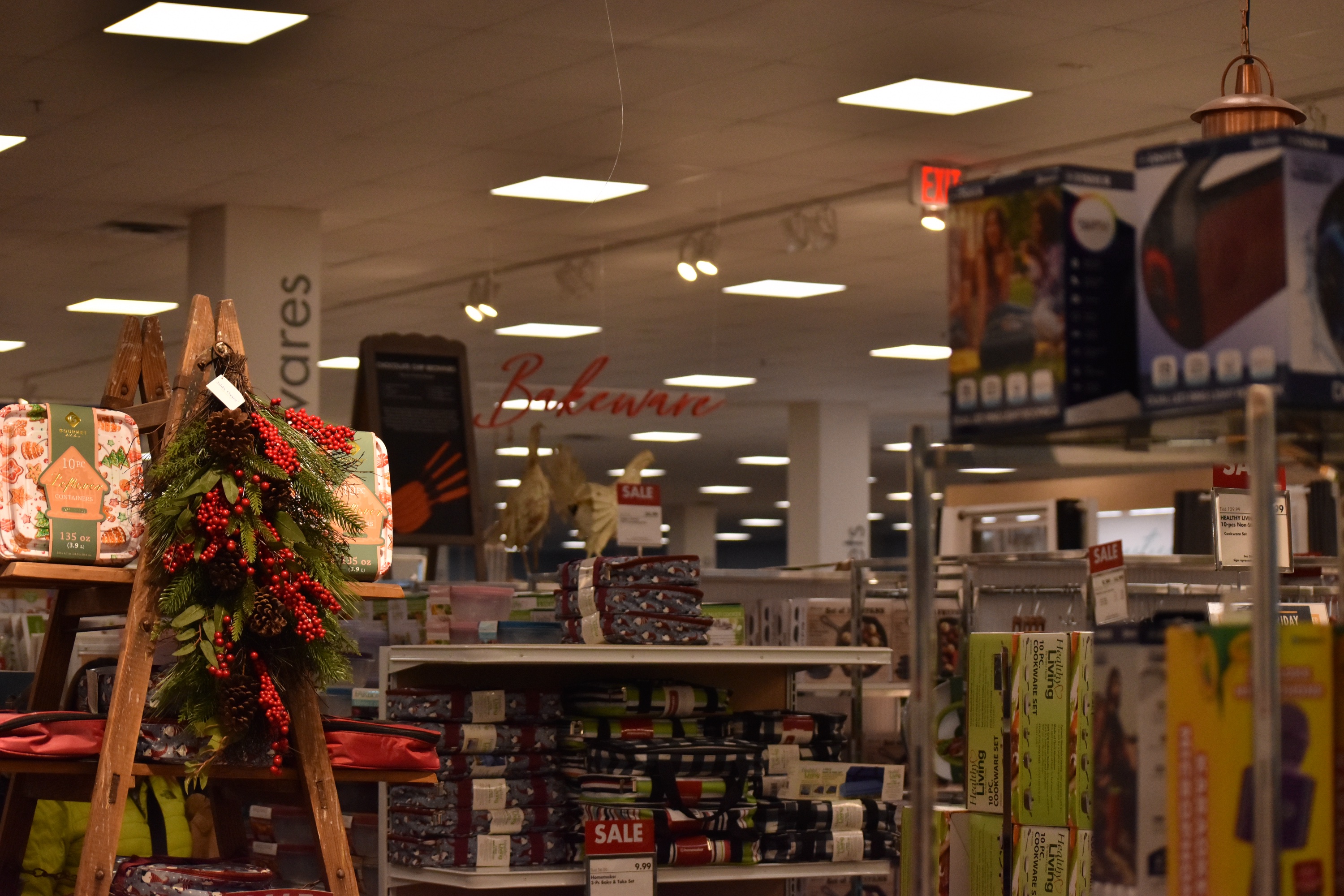
Boscov’s succeeded Nordstrom in the fall of 2019. Based in Pennsylvania, the family-owned department store was the first of its chain to arrive in Rhode Island and is known for partnering with local nonprofits.
In one program, the store gives nonprofits multiple one-day-only 25% off coupons, which they can sell for five dollars, Store Manager Victoria Belair said. The nonprofits keep 100% of the proceeds from the voucher sales.
In previous Herald reporting, Chairman and CEO Jim Boscov emphasized the store’s mission to be a “member of the community.” The store is distinguished by its low prices, which are “sharper than anything people have seen in the past,” Boscov added.
Lucy de Jesus is a floor manager who has worked at the store since its opening.
“It’s like my second house,” de Jesus said. Every day, she looks forward to her morning meetings with her coworkers, who “feel like family here.”
While customers dropped during the COVID-19 pandemic, foot traffic seems to have returned to pre-pandemic levels, de Jesus said.
The store held its big 20% off sale on Nov. 15. It was quiet, with only a couple of customers shopping for items as many customer service kiosks sat empty.
Cheryl White was searching for a pair of socks. She has been a regular customer since the store opened in 2019, she told The Herald, often coming twice or three times a month. But “I’m not a mall girl,” she admitted. “They’re overpriced.”
But Boscov’s pricing brings her to Providence Place, even though there’s another mall closer to where she lives in Warwick.
“I look for the deals,” she explained.
Donna Vento and Donna Folcarelli, both shoppers at the mall on Nov. 15, told The Herald that the store’s affordability is a draw. The two had never shopped at Nordstrom, and only came after Boscov’s opened.
“The prices in here are a lot better,” said Vento, a retired nurse from Johnston. “You have the same items that you would buy at Kohl’s or Macy’s or Penney’s.”
In 2015, Providence Place’s JCPenney location closed its doors after spending almost a decade anchoring the mall. Rather than finding a new tenant, the GGP saw an opportunity for its first major renovation.
The following year, the GGP took over the bottom two floors of the former department store for 150 new parking spaces. The project, which cost over $20 million, also installed a new digital parking system, alongside other improvements.
In 2018, Nordstrom announced it would be leaving Providence Place the following January. “When we look at our business in the Providence market, we determined it made most sense to end our Providence Place lease,” said Jamie Nordstrom, then-president of the company’s stores, in a press release at the time.
The department store had opened as the mall’s first tenant. Before construction of the mall had even completed, Paolino had traveled to Seattle with then-mayor Cianci and then-governor Bruce Sundlun to persuade the Nordstrom family to open a location at Providence Place, according to previous Herald reporting.
“To have Nordstrom there, that was an anchor that would bring shoppers to visit Rhode Island,” Paolino said in a recent interview with The Herald.
The Herald spoke to many current mall shoppers who shared that they mourn the loss of the flagship store, citing its departure as a reason they no longer visit the mall as frequently. “I stopped going after Nordstrom moved out,” Cox affirmed.
Paolino said that the city government at the time should have taken more steps to prevent the closure. “They should have done everything they could to have kept them,” he said.
Boscov’s succeeded Nordstrom in the fall of 2019. Based in Pennsylvania, the family-owned department store was the first of its chain to arrive in Rhode Island and is known for partnering with local nonprofits.
In one program, the store gives nonprofits multiple one-day-only 25% off coupons, which they can sell for five dollars, Store Manager Victoria Belair said. The nonprofits keep 100% of the proceeds from the voucher sales.
In previous Herald reporting, Chairman and CEO Jim Boscov emphasized the store’s mission to be a “member of the community.” The store is distinguished by its low prices, which are “sharper than anything people have seen in the past,” Boscov added.
Lucy de Jesus is a floor manager who has worked at the store since its opening.
“It’s like my second house,” de Jesus said. Every day, she looks forward to her morning meetings with her coworkers, who “feel like family here.”
While customers dropped during the COVID-19 pandemic, foot traffic seems to have returned to pre-pandemic levels, de Jesus said.
The store held its big 20% off sale on Nov. 15. It was quiet, with only a couple of customers shopping for items as many customer service kiosks sat empty.
Cheryl White was searching for a pair of socks. She has been a regular customer since the store opened in 2019, she told The Herald, often coming twice or three times a month. But “I’m not a mall girl,” she admitted. “They’re overpriced.”
But Boscov’s pricing brings her to Providence Place, even though there’s another mall closer to where she lives in Warwick.
“I look for the deals,” she explained.
Donna Vento and Donna Folcarelli, both shoppers at the mall on Nov. 15, told The Herald that the store’s affordability is a draw. The two had never shopped at Nordstrom, and only came after Boscov’s opened.
“The prices in here are a lot better,” said Vento, a retired nurse from Johnston. “You have the same items that you would buy at Kohl’s or Macy’s or Penney’s.”
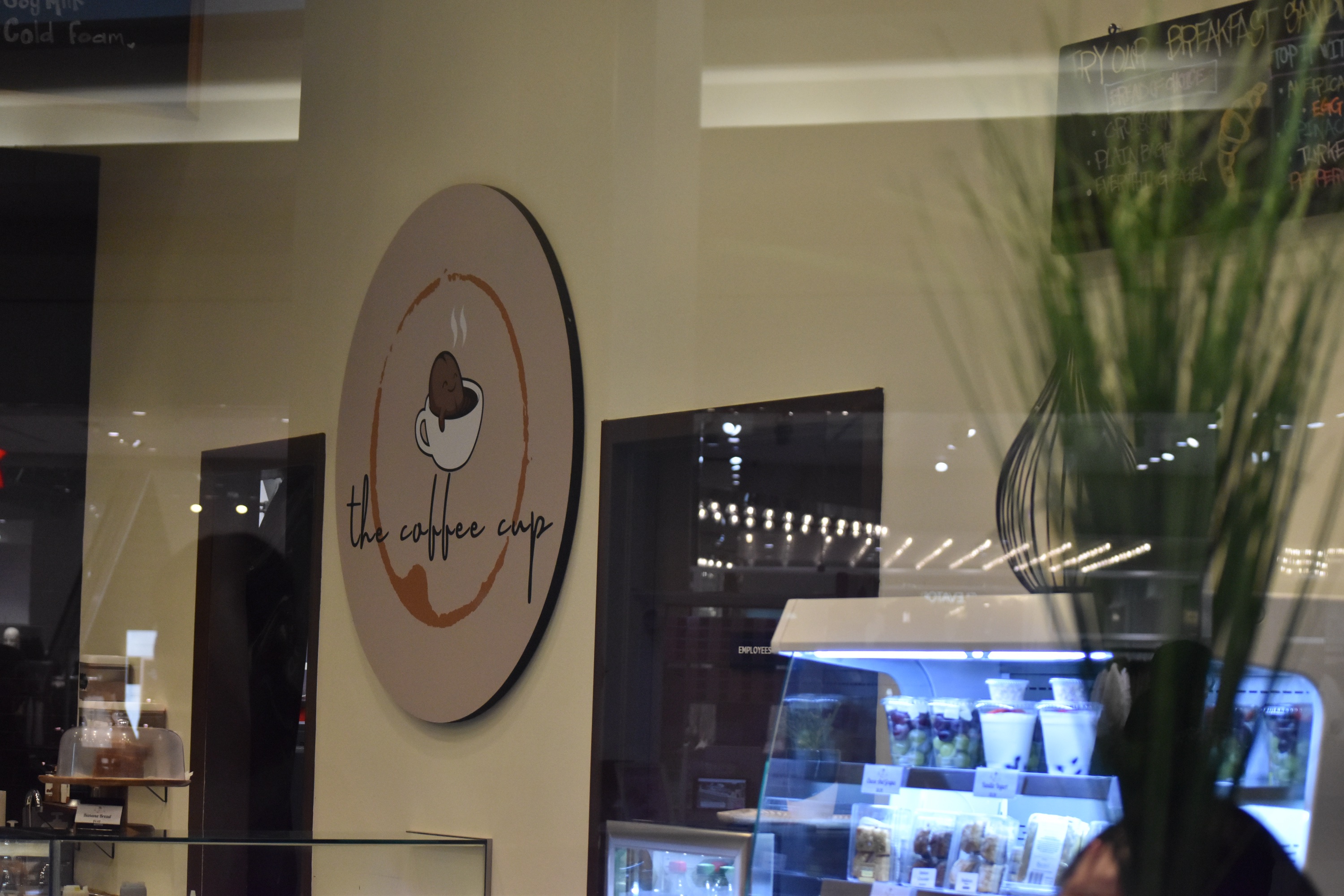
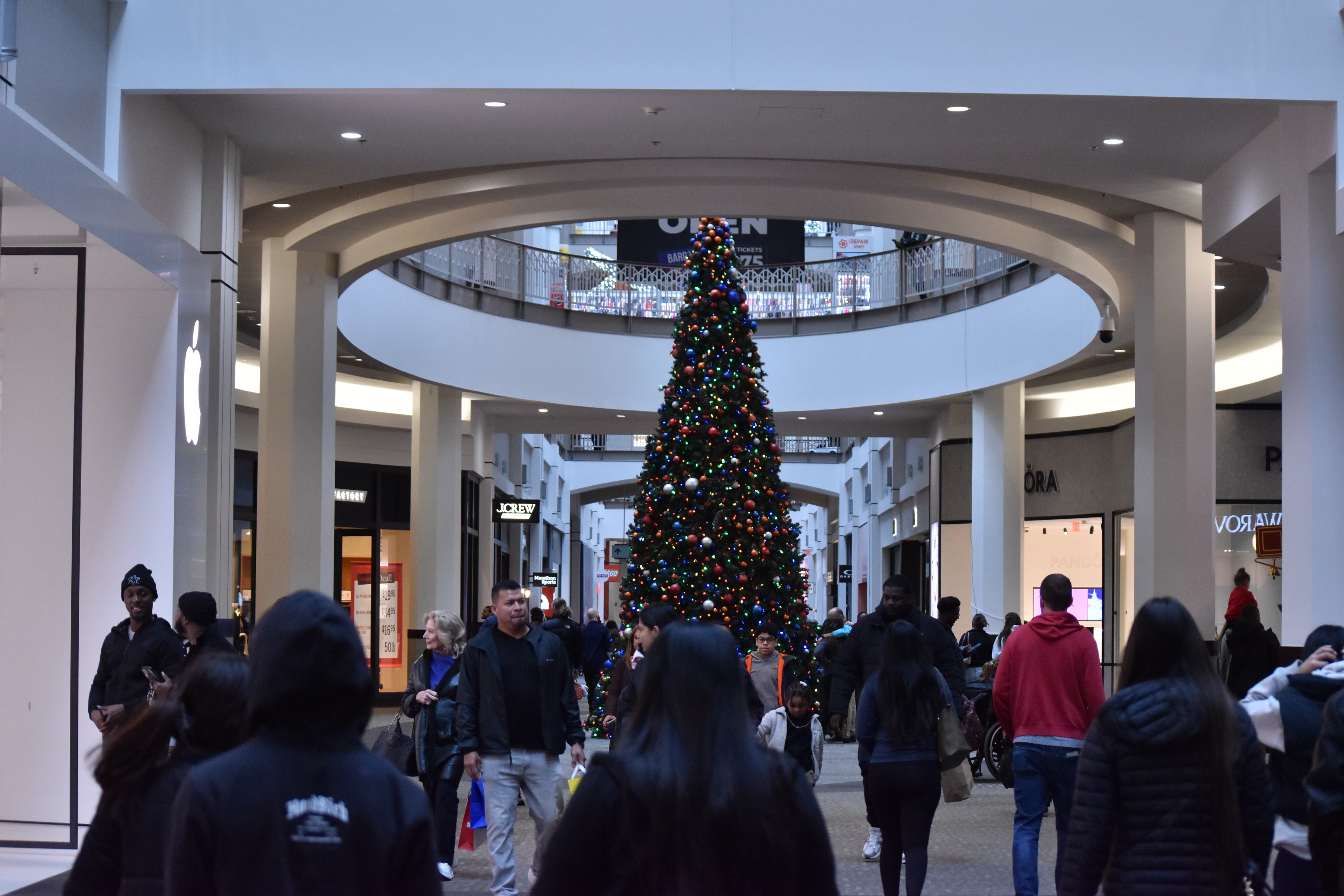
Photos by Selina Kao | The Brown Daily Herald
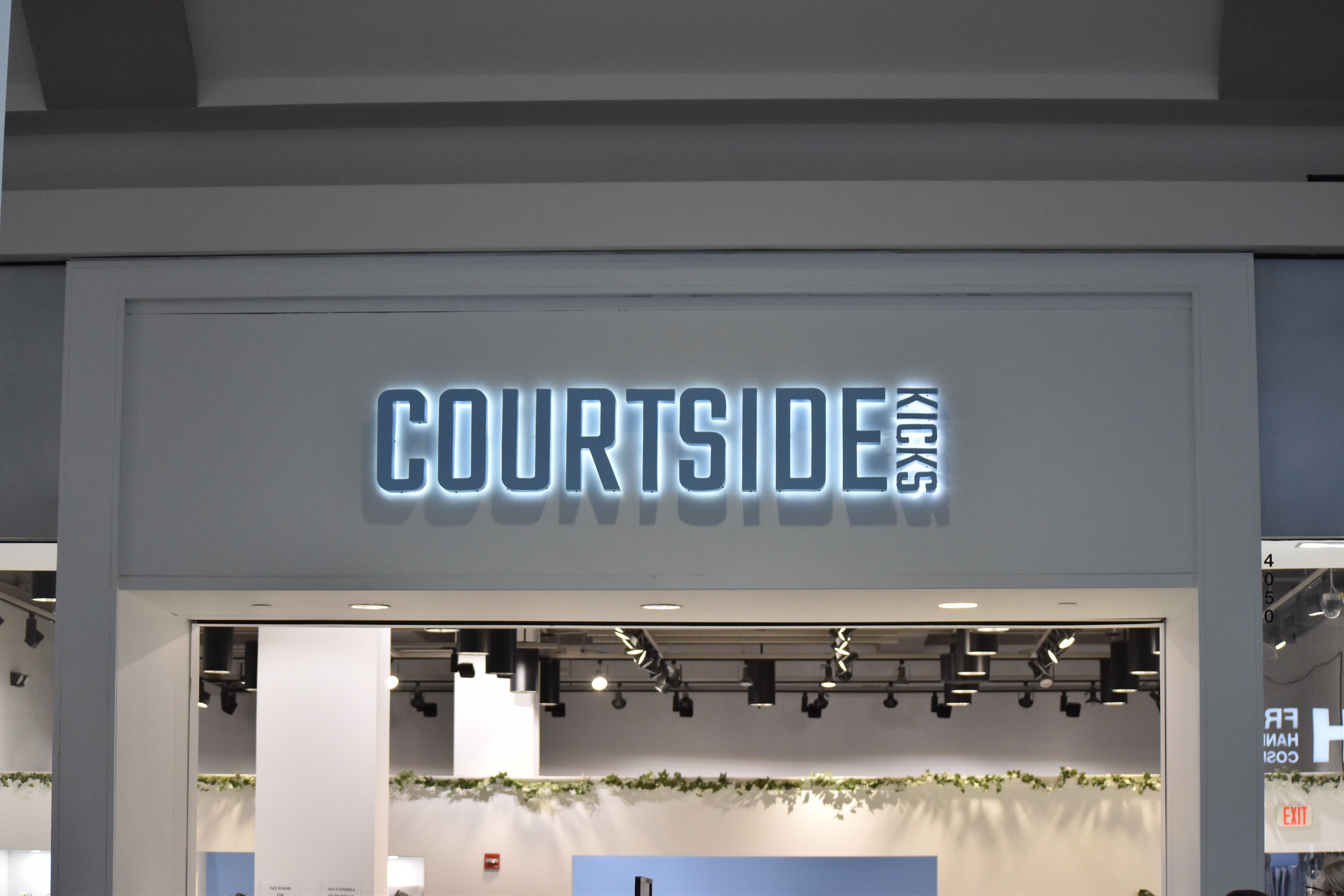
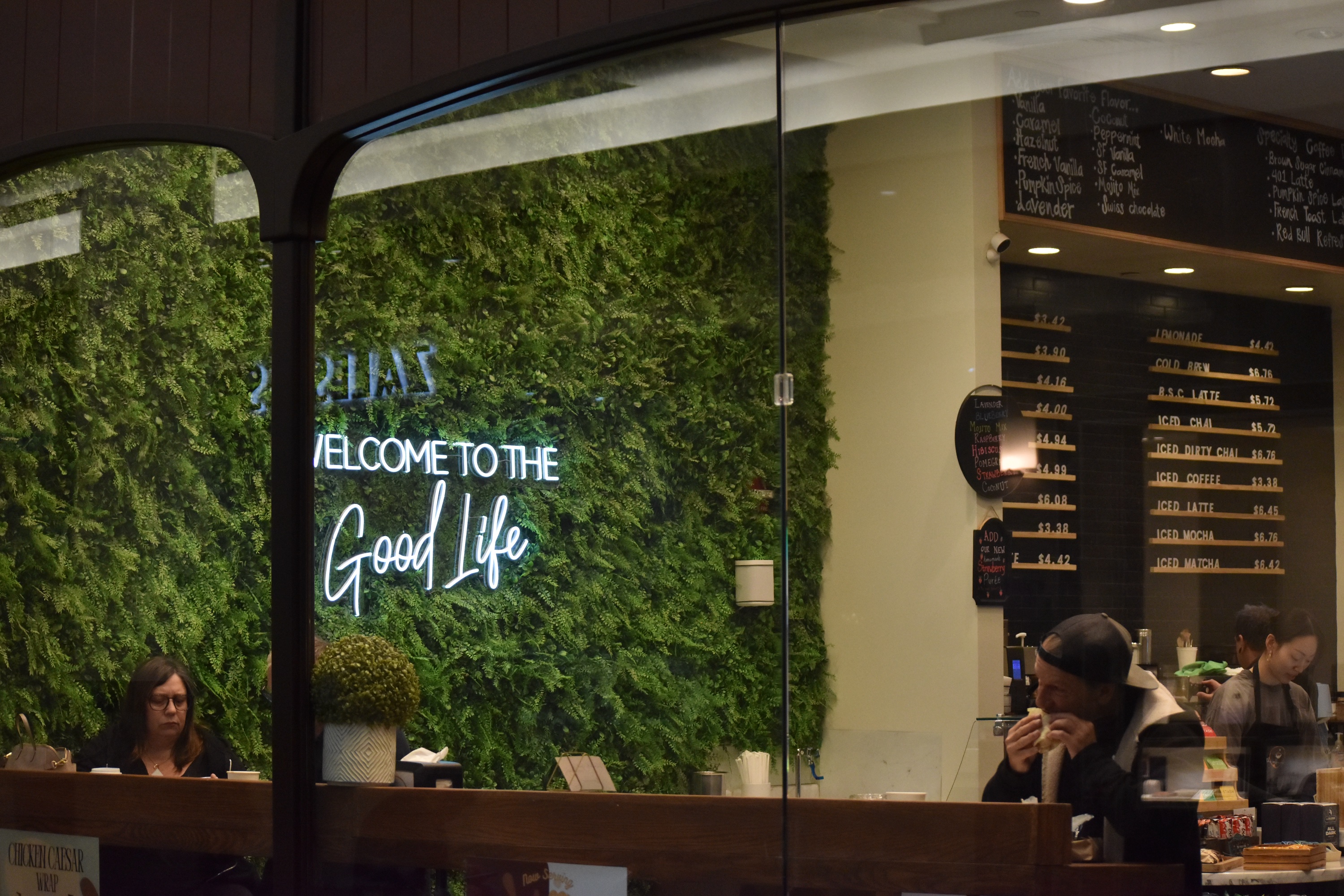
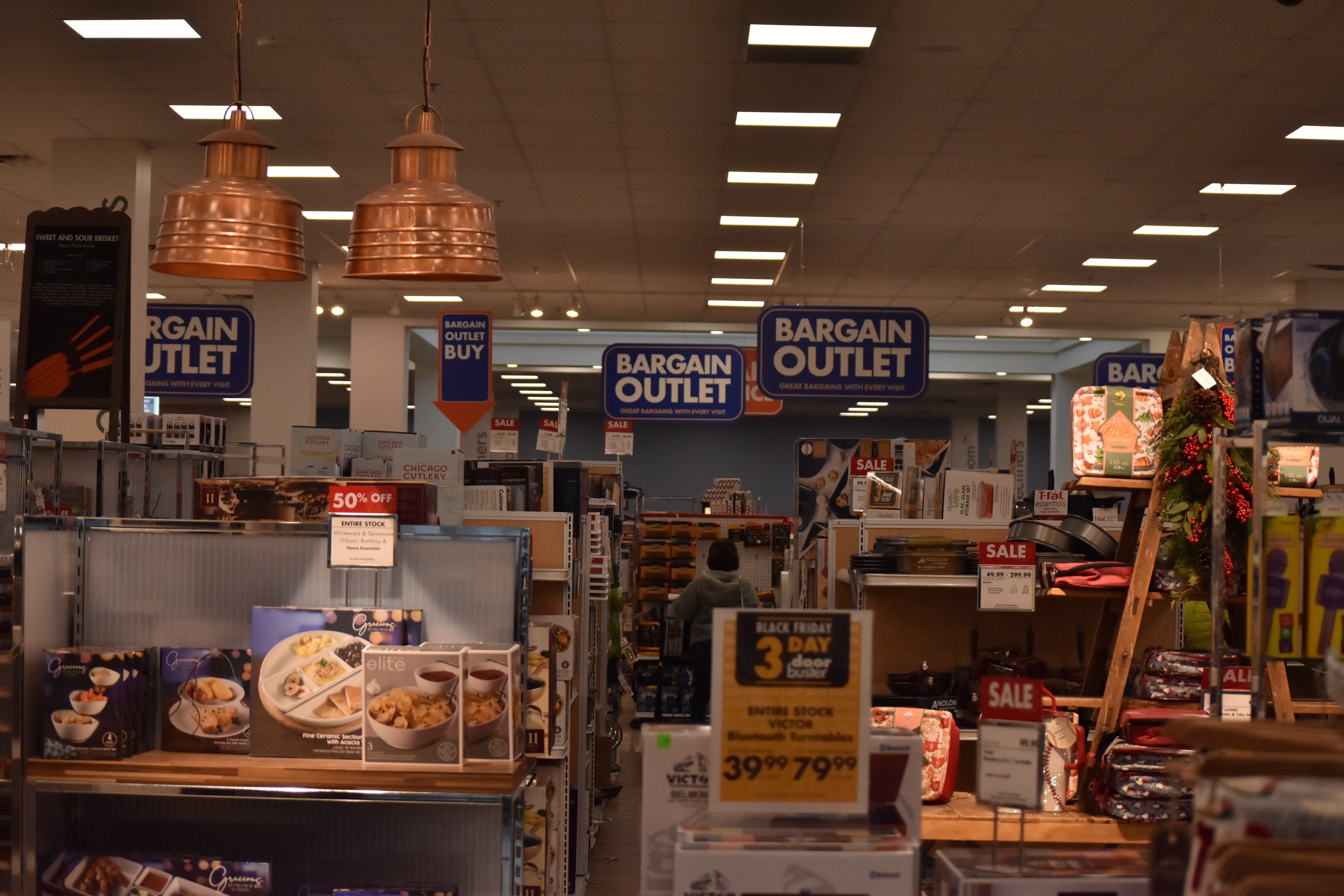
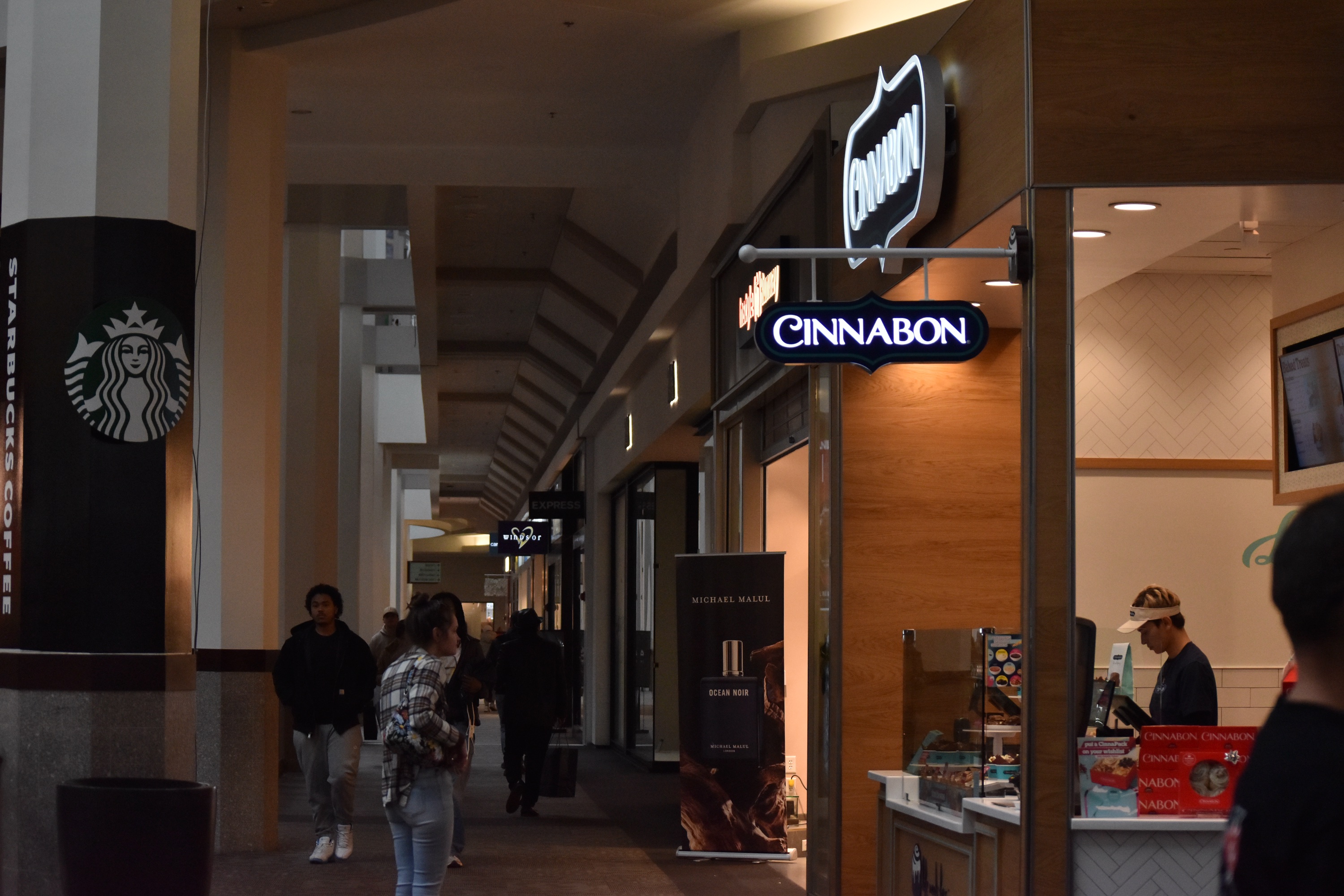
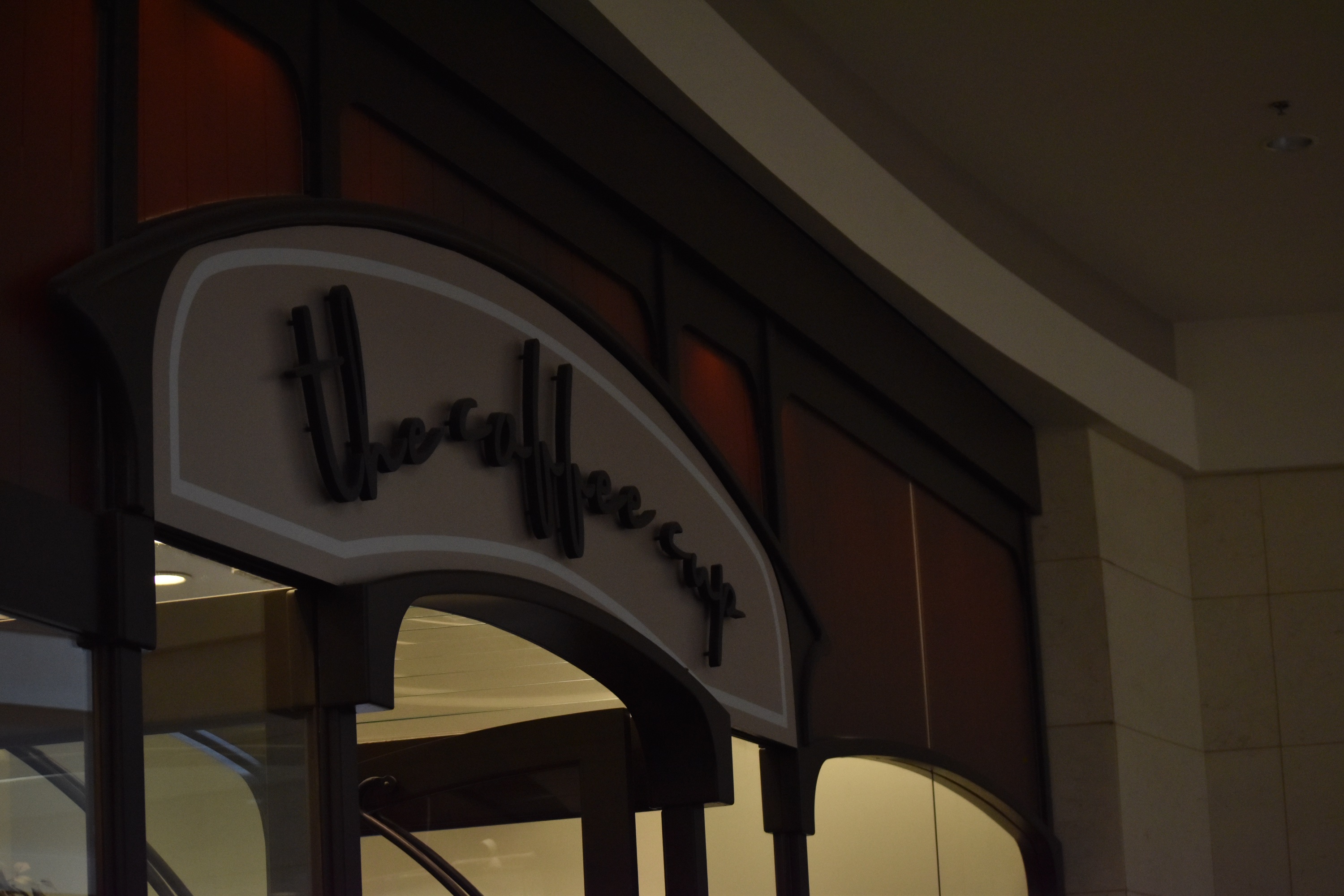
Photos by Selina Kao | The Brown Daily Herald
2018 to 2024: Management shake-ups
In 2018, the mall’s ownership changed hands after Brookfield Properties, a global real estate firm, bought the GGP in a $9.25 billion deal, according to a 2018 press release.
Brookfield had played a role in facilitating the GGP’s recovery from bankruptcy through an initial purchase of future shares, according to a 2013 press release. The firm had previously bid to take over the GGP, an offer rejected in 2017, the Providence Journal reported.
Like the rest of the world around it, the Providence Place Mall’s momentum ground to a halt in 2020 during the COVID-19 pandemic as the mall closed for business in March of that year. The mall remained closed through May 2020 and fell behind on mortgage payments, as reported by The Providence Journal.
The mall continued to struggle in the following few years before beginning to bounce back in 2022.
In October 2024, the Providence Place Mall was placed into court-ordered receivership after private lenders alleged that Brookfield owed $259 million after taking out $305 million in loans in 2011.
In an email to The Herald, Mark Russo, a West Warwick-based attorney and temporary receiver of the mall, wrote that “it has taken us about a year to stabilize the property” since the beginning of the receivership. Under receivership, the mall has undergone renovations to the parking garage and updated its code of conduct, which prohibits groups of four or more people and outlines other policies banning unaccompanied minors in the mall during certain hours.
“The former operator had allowed security and housekeeping hours to dip to unacceptable levels,” Russo wrote. “The Providence Place Mall had somewhat of an earned perception as no longer being attractive to patrons because it had become a hangout.”
According to Russo, the receivership has also addressed renovation issues that were deferred by past management. Russo said that mall operators discovered outdated facilities while receivers were in the process of finding a new theater operator after National Amusements, the parent company of Showcase Cinemas, ended its lease at Providence Place.
“We came to discover that the HVAC system for the theater was the original from when the mall was first built some 25 years ago,” Russo wrote. “Accordingly, we will be replacing those rooftop units in April of 2026.”
As part of the mall’s receivership process, Centennial Real Estate Management took over management of Providence Place from Brookfield Properties. While Centennial’s role in the mall after the receivership remains uncertain, Russo says he is “hopeful that Centennial will consider remaining involved with a buyer, but that is to be a decision to be made by the buyer and Centennial.”
Russo expects the mall to go to market “sometime this month” and “would imagine that a sale process will take at least three to four months to complete.” He estimated that the receivership will conclude by mid-2026.
Brookfield did not respond to multiple requests for comment.
According to Spencer Reith, a co-owner of Courtside Kicks in the mall, the management under the receivership has been “great.”
“I think the new ownership has been doing a better job at promoting the mall and advertising it,” Reith told The Herald in April. “If anything, we’ve seen an uptick in the last few months for foot traffic.”
In 2018, the mall’s ownership changed hands after Brookfield Properties, a global real estate firm, bought the GGP in a $9.25 billion deal, according to a 2018 press release.
Brookfield had played a role in facilitating the GGP’s recovery from bankruptcy through an initial purchase of future shares, according to a 2013 press release. The firm had previously bid to take over the GGP, an offer rejected in 2017, the Providence Journal reported.
Like the rest of the world around it, the Providence Place Mall’s momentum ground to a halt in 2020 during the COVID-19 pandemic as the mall closed for business in March of that year. The mall remained closed through May 2020 and fell behind on mortgage payments, as reported by The Providence Journal.
The mall continued to struggle in the following few years before beginning to bounce back in 2022.
In October 2024, the Providence Place Mall was placed into court-ordered receivership after private lenders alleged that Brookfield owed $259 million after taking out $305 million in loans in 2011.
In an email to The Herald, Mark Russo, a West Warwick-based attorney and temporary receiver of the mall, wrote that “it has taken us about a year to stabilize the property” since the beginning of the receivership. Under receivership, the mall has undergone renovations to the parking garage and updated its code of conduct, which prohibits groups of four or more people and outlines other policies banning unaccompanied minors in the mall during certain hours.
“The former operator had allowed security and housekeeping hours to dip to unacceptable levels,” Russo wrote. “The Providence Place Mall had somewhat of an earned perception as no longer being attractive to patrons because it had become a hangout.”
According to Russo, the receivership has also addressed renovation issues that were deferred by past management. Russo said that mall operators discovered outdated facilities while receivers were in the process of finding a new theater operator after National Amusements, the parent company of Showcase Cinemas, ended its lease at Providence Place.
“We came to discover that the HVAC system for the theater was the original from when the mall was first built some 25 years ago,” Russo wrote. “Accordingly, we will be replacing those rooftop units in April of 2026.”
As part of the mall’s receivership process, Centennial Real Estate Management took over management of Providence Place from Brookfield Properties. While Centennial’s role in the mall after the receivership remains uncertain, Russo says he is “hopeful that Centennial will consider remaining involved with a buyer, but that is to be a decision to be made by the buyer and Centennial.”
Russo expects the mall to go to market “sometime this month” and “would imagine that a sale process will take at least three to four months to complete.” He estimated that the receivership will conclude by mid-2026.
Brookfield did not respond to multiple requests for comment.
According to Spencer Reith, a co-owner of Courtside Kicks in the mall, the management under the receivership has been “great.”
“I think the new ownership has been doing a better job at promoting the mall and advertising it,” Reith told The Herald in April. “If anything, we’ve seen an uptick in the last few months for foot traffic.”
2024 to 2026: Today’s Providence Place
In January 2024, Level99 — part arcade, part bar and restaurant — moved into the third floor lot, formerly the site of JCPenney. According to Matthew DuPlessie, founder and CEO of Level99, the demographics of nearby residents make Providence Place a good fit for the concept.
“The peak of our demographic curve is young adults who are mentally, socially and physically active people who want to get out and do things,” DuPlessie said. “There’s a lot of that in Providence.”
According to DuPlessie, the mall’s receivership has not hindered operations.
“The average person going to Providence Place isn’t aware or doesn’t care who the owner is,” DuPlessie said. “They care how the facility is kept, they care about what the tenant mix is.”
He added that the business has seen a “positive” change since the receivership went into effect.
“The new ownership is actually spending money again,” DuPlessie said. He explained that new managers have fixed elevators, installed new equipment for gates and introduced access control for parking.
Providence Place has housed an IMAX-capable movie theater above its food court since its first year of operations. So when National Amusements — the parent company of Showcase Cinemas, which occupies the space — decided against renewing its lease in fall 2025, mall receivers began looking for a new theater chain to use the space.
Apple Cinemas opened on Nov. 1, using the furniture and equipment left behind by Showcase in October. The new theater operators plan to install a bowling lounge, a trampoline park and a bar in the space.
For current employee Amanda Graves, who worked at Showcase for “probably almost a year” before Apple Cinemas began running the space, the transition has been somewhat “stressful” because “everything’s changing.”
Apple Cinemas did not respond to multiple requests for comment.
Two weeks after Apple Cinemas began business at the mall, Graves told The Herald that the theater has been “pretty dead,” except for when new movies come out.
“We get a good amount of people, but not as much as we did for Showcase,” Graves said. She added that this decrease in customers might be because “people don’t believe yet that Apple Cinemas is open.”
When Showcase announced its departure from Providence Place in October, Carter Via ’28 told The Herald that he was “heartbroken” and that going to see movies with his friends during his first year at Brown was “formative” and “a lot of fun.”
After hearing that Apple Cinemas would continue to operate the theater, some students expressed cautious optimism and relief in interviews with The Herald.
“I actually have a lot of really good memories going with friends to watch a movie, pretty spontaneously, (on) random Friday, Saturday nights,” Finnur Christianson ’27 said in November.
In January 2024, Level99 — part arcade, part bar and restaurant — moved into the third floor lot, formerly the site of JCPenney. According to Matthew DuPlessie, founder and CEO of Level99, the demographics of nearby residents make Providence Place a good fit for the concept.
“The peak of our demographic curve is young adults who are mentally, socially and physically active people who want to get out and do things,” DuPlessie said. “There’s a lot of that in Providence.”
According to DuPlessie, the mall’s receivership has not hindered operations.
“The average person going to Providence Place isn’t aware or doesn’t care who the owner is,” DuPlessie said. “They care how the facility is kept, they care about what the tenant mix is.”
He added that the business has seen a “positive” change since the receivership went into effect.
“The new ownership is actually spending money again,” DuPlessie said. He explained that new managers have fixed elevators, installed new equipment for gates and introduced access control for parking.
Providence Place has housed an IMAX-capable movie theater above its food court since its first year of operations. So when National Amusements — the parent company of Showcase Cinemas, which occupies the space — decided against renewing its lease in fall 2025, mall receivers began looking for a new theater chain to use the space.
Apple Cinemas opened on Nov. 1, using the furniture and equipment left behind by Showcase in October. The new theater operators plan to install a bowling lounge, a trampoline park and a bar in the space.
For current employee Amanda Graves, who worked at Showcase for “probably almost a year” before Apple Cinemas began running the space, the transition has been somewhat “stressful” because “everything’s changing.”
Apple Cinemas did not respond to multiple requests for comment.
Two weeks after Apple Cinemas began business at the mall, Graves told The Herald that the theater has been “pretty dead,” except for when new movies come out.
“We get a good amount of people, but not as much as we did for Showcase,” Graves said. She added that this decrease in customers might be because “people don’t believe yet that Apple Cinemas is open.”
When Showcase announced its departure from Providence Place in October, Carter Via ’28 told The Herald that he was “heartbroken” and that going to see movies with his friends during his first year at Brown was “formative” and “a lot of fun.”
After hearing that Apple Cinemas would continue to operate the theater, some students expressed cautious optimism and relief in interviews with The Herald.
“I actually have a lot of really good memories going with friends to watch a movie, pretty spontaneously, (on) random Friday, Saturday nights,” Finnur Christianson ’27 said in November.
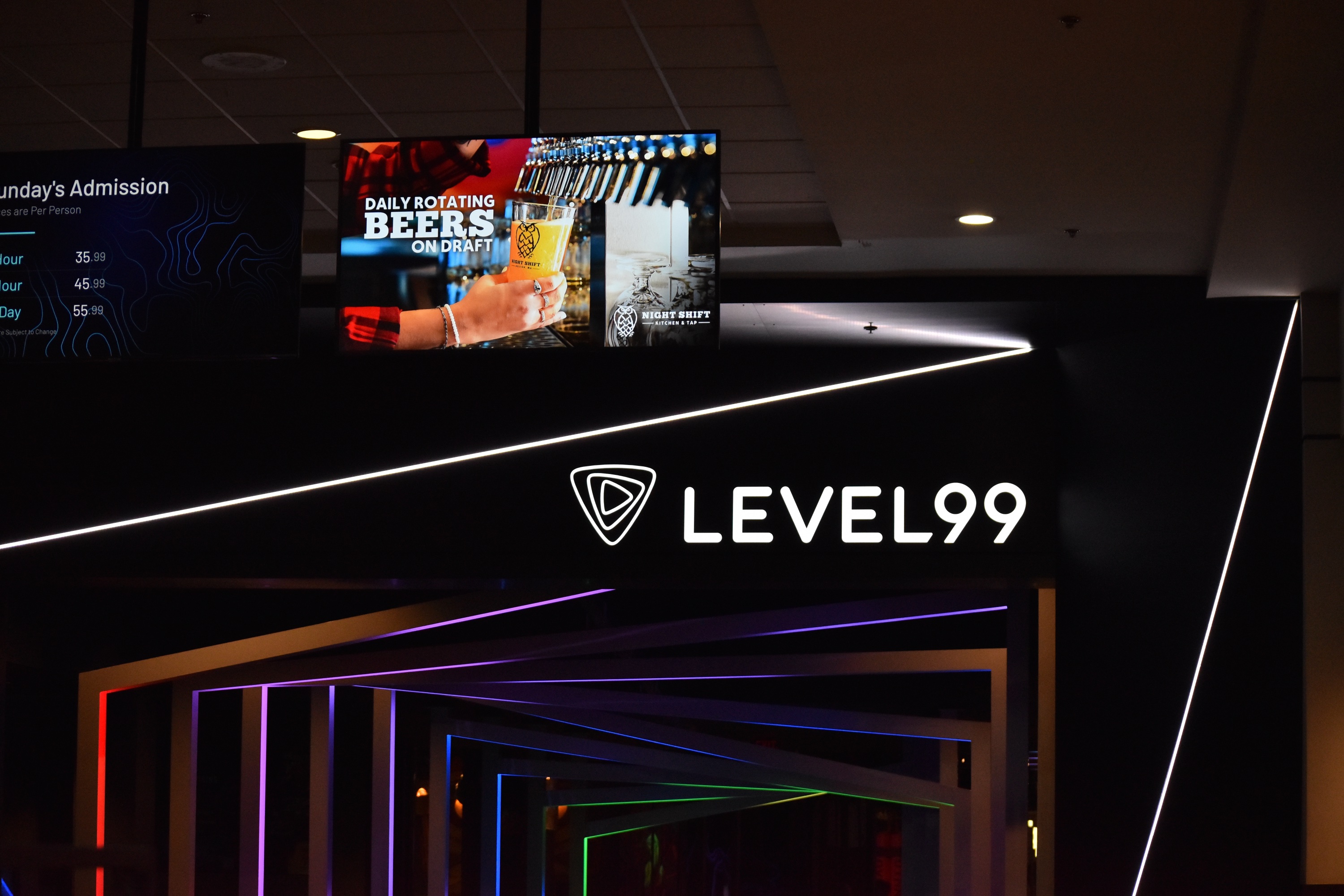
Photo by Selina Kao | The Brown Daily Herald

Photo by Selina Kao | The Brown Daily Herald
The one constant: Dave and Busters
Weathering the decades of storms plaguing the Providence Place Mall, one anchor business has managed to stay steady. Dave and Buster’s has remained in its location across from the movie theater, hosting children’s birthdays and welcoming guests for arcade games since 2000. On the morning of Nov. 15, many of the chain’s guests were grandparents spending some time with their grandchildren.
“He loves coming here,” said Dave and Buster’s visitor Mary Millard, gesturing to her grandson, who was immersed in an arcade game. “This is really the only thing, other than Level99, for kids their age.”
Millard said she had been coming to Providence Place since the mall first opened.
“We’ve lived here for a long time,” Millard said. “We were coming here with our sons when they were like 18, 22.”
Nurisbel Santana, who has worked at Dave and Buster’s for close to half a year, enjoys the “hands-on experience” of her job.
Working the front desk, Santana sees customers come in for parties at many milestones in life, from kids’ birthdays, to graduation celebrations, to bachelorette parties.
“I love seeing little kids coming in for the first time and walk out like, ‘That was awesome!’” Santana said.
Jaime Pereira, the manager at the Providence Place Dave & Buster’s since August 2024, said that the business has prioritized “adding value” for guests to try and increase foot traffic amid recent mall shakeups.
Some examples include the “Eat and Play” combo, which allows guests to pair an entree with a $10 game play card, and seasonal game play passes, which Dave and Buster's staff can offer to guests at parties to entice them to return.
“Obviously, the games are a big draw,” Pereira said. “That’s, like, 70% of our income.” According to Pereira, the Providence Place Dave and Buster’s has benefitted from a “lack of competition in the area” — a sentiment that multiple visitors shared.
“Dave and Busters offers something that’s not duplicated anywhere nearby,” Pereira added.
For Santana, the business’s success over so many years is attributed to a simple principle: “If it’s not broken, don’t fix it.”
Weathering the decades of storms plaguing the Providence Place Mall, one anchor business has managed to stay steady. Dave and Buster’s has remained in its location across from the movie theater, hosting children’s birthdays and welcoming guests for arcade games since 2000. On the morning of Nov. 15, many of the chain’s guests were grandparents spending some time with their grandchildren.
“He loves coming here,” said Dave and Buster’s visitor Mary Millard, gesturing to her grandson, who was immersed in an arcade game. “This is really the only thing, other than Level99, for kids their age.”
Millard said she had been coming to Providence Place since the mall first opened.
“We’ve lived here for a long time,” Millard said. “We were coming here with our sons when they were like 18, 22.”
Nurisbel Santana, who has worked at Dave and Buster’s for close to half a year, enjoys the “hands-on experience” of her job.
Working the front desk, Santana sees customers come in for parties at many milestones in life, from kids’ birthdays, to graduation celebrations, to bachelorette parties.
“I love seeing little kids coming in for the first time and walk out like, ‘That was awesome!’” Santana said.
Jaime Pereira, the manager at the Providence Place Dave & Buster’s since August 2024, said that the business has prioritized “adding value” for guests to try and increase foot traffic amid recent mall shakeups.
Some examples include the “Eat and Play” combo, which allows guests to pair an entree with a $10 game play card, and seasonal game play passes, which Dave and Buster's staff can offer to guests at parties to entice them to return.
“Obviously, the games are a big draw,” Pereira said. “That’s, like, 70% of our income.” According to Pereira, the Providence Place Dave and Buster’s has benefitted from a “lack of competition in the area” — a sentiment that multiple visitors shared.
“Dave and Busters offers something that’s not duplicated anywhere nearby,” Pereira added.
For Santana, the business’s success over so many years is attributed to a simple principle: “If it’s not broken, don’t fix it.”
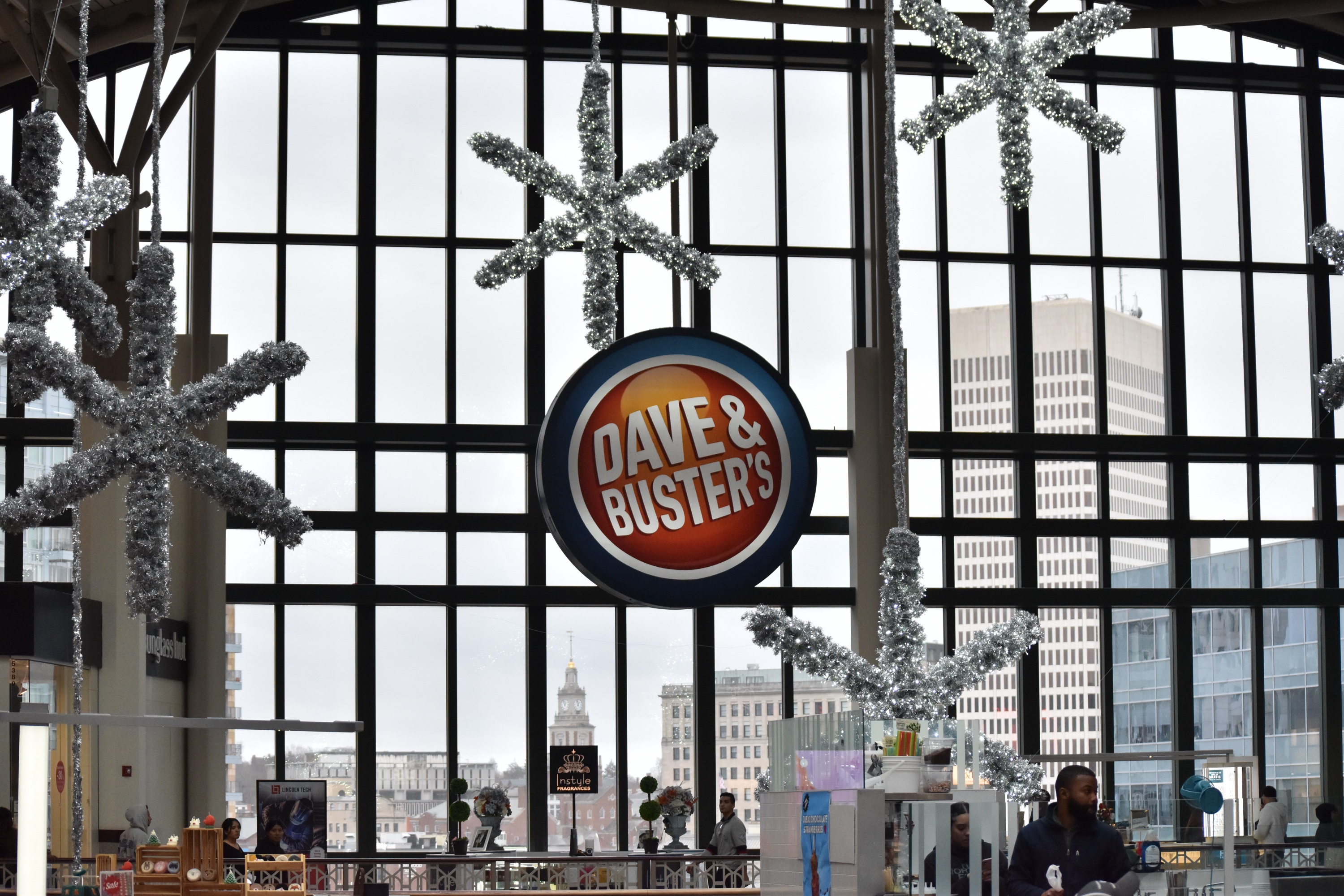
Photo by Selina Kao | The Brown Daily Herald
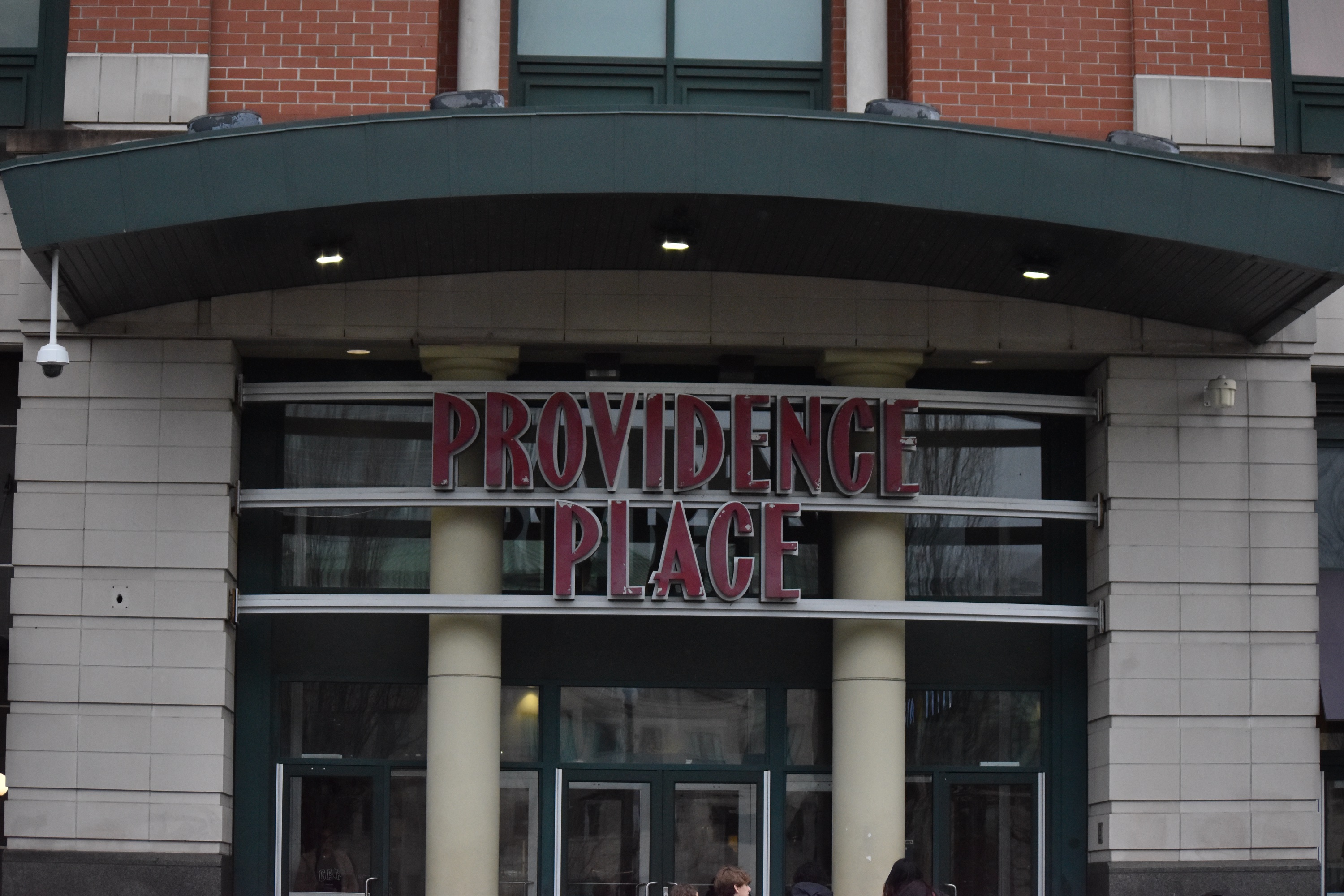
Photo by Selina Kao | The Brown Daily Herald
The future: A resilient symbol of community
To some, the Providence Place Mall has lost its allure.
In conversations with The Herald, some Rhode Island shoppers said they have turned to other shopping centers, like Garden City Center in Cranston or The Crossing at Smithfield. Others said they rarely come to the mall, preferring to do their shopping online.
No new indoor megamalls have been built in the United States since 2006. According to Capital One, up to 87% percent of large shopping malls are expected to close in the next decade. “You don’t see any new malls being developed,” Sherman said. “Twenty years ago, there would be a new mall every week.”
But some malls are finding ways to keep people coming back. Stores like Dave and Buster’s and Level99 are examples of experiential opportunities, a growing strategy among malls across the country. Other mall owners have chosen to develop vacant store space into apartments or even ice rinks.
Although the Providence Place Mall has faced its fair share of challenges, the carpeted walkways still bustled with energy when The Herald visited the mall in November. Couples sat in the food court and families toted armfuls of shopping bags.
“As somebody who is here literally every single day, I’m very honestly confused about the mass misconception about the fact that the mall is doing bad,” said TraciMarie Chandler, a manager at the Coffee Cup, a coffee shop in the mall.
For Chandler, the mall is the “most community-based job (she’s) worked at.”
“I personally love working here,” she said. “I don’t really see the mall closing any time soon.”
For now, it looks like the Providence Place Mall — despite its troubles — is here to stay.
To some, the Providence Place Mall has lost its allure.
In conversations with The Herald, some Rhode Island shoppers said they have turned to other shopping centers, like Garden City Center in Cranston or The Crossing at Smithfield. Others said they rarely come to the mall, preferring to do their shopping online.
No new indoor megamalls have been built in the United States since 2006. According to Capital One, up to 87% percent of large shopping malls are expected to close in the next decade. “You don’t see any new malls being developed,” Sherman said. “Twenty years ago, there would be a new mall every week.”
But some malls are finding ways to keep people coming back. Stores like Dave and Buster’s and Level99 are examples of experiential opportunities, a growing strategy among malls across the country. Other mall owners have chosen to develop vacant store space into apartments or even ice rinks.
Although the Providence Place Mall has faced its fair share of challenges, the carpeted walkways still bustled with energy when The Herald visited the mall in November. Couples sat in the food court and families toted armfuls of shopping bags.
“As somebody who is here literally every single day, I’m very honestly confused about the mass misconception about the fact that the mall is doing bad,” said TraciMarie Chandler, a manager at the Coffee Cup, a coffee shop in the mall.
For Chandler, the mall is the “most community-based job (she’s) worked at.”
“I personally love working here,” she said. “I don’t really see the mall closing any time soon.”
For now, it looks like the Providence Place Mall — despite its troubles — is here to stay.